Most piano teacher websites in London hide their prices. You click through to a contact form, fill in your details, and wait for an email that tells you nothing concrete until you have already half-committed to a phone call. There is a reason for this (price discrimination, mostly) and there is also a way around it: ask, and ask early.
This is the honest 2026 landscape for piano lesson prices in London, what drives the differences, and how to evaluate whether you are paying for something real.
Based in Harrow and want a straight answer for your situation? Book a trial lesson with a conservatoire-trained teacher. We give you an honest read of where you (or your child) are, and exactly what it would cost going forward. Book your trial lesson.
The full spectrum (London, 2026)
Per one-hour lesson, broadly:
- £15 to £25, Group lessons (usually 4 to 8 children together), university student tutors offering private 1-to-1 lessons, app subscriptions with weekly live elements.
- £25 to £40, Self-taught teachers and music graduates without conservatoire training, working part-time. Usually fine for absolute beginners; less reliable beyond Grade 2.
- £40 to £65, Conservatoire-trained teachers (Trinity Laban, Royal Academy, Royal College, BIMM, Guildhall) in Zone 4 and outwards. Where our own pricing sits. Most committed students settle in this band.
- £65 to £100, The same conservatoire-trained tier in central London, plus teachers who specialise in advanced diploma preparation or are themselves still actively concertising.
- £100 to £200+, Internationally recognised concert pianists who also teach. A real category, not a marketing exaggeration. Realistic for students preparing for international competitions or conservatoire entrance.
If a London teacher quotes you well above or below their tier with no clear reason, ask why. There are good reasons (someone established their pricing in 2019 and never raised it, or someone is building a new studio and offering introductory pricing for a fixed period). There are bad reasons too.
What actually drives the price
Five factors, ordered by how much they actually matter:
1. Conservatoire training. A Trinity Laban, Royal Academy, Royal College, BIMM or equivalent BMus / MMus is a meaningful filter. It does not guarantee a great teacher (some great teachers are self-taught performers and some terrible teachers have impressive degrees) but it does indicate that someone has thought seriously about piano for at least four years under expert supervision. Worth a 30 to 50 per cent premium over the un-trained tier.
2. Whether the teacher still performs. A piano teacher who has not played in front of an audience for ten years is teaching the piano from a memory of what it used to feel like. The decisions that make practice work, that turn nervous performances into confident ones, that get a Grade 5 candidate through their exam recital, come from a teacher who has been in that room recently. Worth a meaningful premium because it directly determines lesson quality.
3. Location and overheads. A teacher with their own dedicated studio (Yamaha grand, proper acoustics, parking) costs more to run than a teacher renting a music school room or teaching from a living room with an upright. Studio teachers will be 15 to 25 per cent more expensive at the same training tier. Whether that is worth it depends on your student.
4. Travel. In-home lessons usually carry a small travel fee on top (typically £5 to £10) or are priced 10 to 20 per cent higher than studio lessons. The fee is genuine; in-home teachers lose 20 to 40 minutes of teachable time per session in transit.
5. Track record. ABRSM and Trinity distinction rates, exam pass rates, where former students have gone. If a teacher publishes their actual distinction rate (we publish ours at over 90 per cent), it is a defensible signal of quality. If a teacher refuses to discuss their exam outcomes, that is also a signal.
Our pricing, with the rationale
We publish ours on the lessons and fees page. For reference:
- £10 trial lesson (30 minutes). The lowest-friction way to find out whether we are right for you (or your child) before you commit. Same price for adults, children, in-person or online.
- £50 per hour (one-off, pay-as-you-go). The standard one-to-one rate.
- £160 a month for a weekly 60-minute lesson, billed as a simple monthly subscription. Works out noticeably cheaper per lesson than paying one-off.
- £220 a month premium plan. A weekly lesson plus custom revision videos and an online piano technique course. For students preparing for exams or auditions.
That puts us solidly in the conservatoire-trained Zone 4+ tier. The pricing is the same for adults and children, the same in-person (Harrow studio or in-home across HA1 to HA8) and online. We do not run different rates for different age groups because the teacher's hour costs the same regardless.
Skip the guesswork
Reading about prices only gets you so far. The quickest way to know whether a teacher is worth £50 an hour is to sit at the piano with one. Our £10 trial is 30 minutes, fully refundable, and you leave with an honest read of your level and a plan, whatever stage you are at.
Book a £10 trial →In-person piano lessons in Harrow (HA1 to HA8) or online · 5.0★ from 30+ families · Trinity Laban trained
Hidden costs to ask about up front
Things that quietly inflate the bill if you do not ask:
- Sheet music. Some teachers include it; some pass on the cost. Ask. A serious student spends £30 to £80 a year on books.
- Exam fees. ABRSM and Trinity exam entry fees are paid by the student, not the teacher. Grade 1 is around £48, Grade 8 around £126 (2026 fees). The teacher submits the entry on your behalf.
- Annual rate increases. Reputable teachers raise rates by inflation each September. If a teacher is on the same rate for three years and then suddenly raises by 25 per cent, that is fine but easier to budget for if you knew it was coming.
- Cancellation policy. 24 hours notice for full credit is standard. Some teachers charge 50 per cent for under-24h cancellations; some charge the full lesson. Ours is published in the cancellation policy; ask whoever you are considering for theirs.
- Recital and concert fees. Some studios charge for student recitals. Ours do not, but ask if you have been quoted by a school that hosts performances.
How to spot bad value (at any price)
A £30 lesson can be excellent and a £90 lesson can be a waste. Five tells of bad value:
- The teacher does not have a piece they are currently working on themselves. Active performance is the strongest indicator a teacher is engaged with the instrument.
- The teacher writes lessons in a fixed week-to-week sequence regardless of the student. Good teaching adapts; a curriculum being followed mechanically is rarely worth premium prices.
- The teacher is unwilling to enter the student for exams. Sometimes this is principled (some teachers reject the exam system). More often it is because the teacher does not want their own pass rate exposed to scrutiny.
- No clear teaching method beyond "whatever you want to play". Beginners need structure. "Whatever you want" is fine for someone at Grade 5 with strong technique; for a beginner it almost always means slow progress and dropping out within a year.
- No trial lesson, or a free trial. Trial lessons should be cheap (£5 to £15) but not free. A teacher who refuses any trial is hiding something; a teacher who offers a free trial is usually devaluing their own time, which tells you something about how they price the rest.
Group lessons: when they work and when they do not
Group lessons (3 to 8 students together) cost £15 to £25 per session and look like a bargain. They work in three scenarios:
- Very young children (4 to 6) for whom group play is more engaging than 1-to-1.
- Adult beginners who specifically want a social context.
- Theory and aural training (which actually benefit from group format).
They do not work for serious 1-to-1 technical development beyond about Grade 2. The teacher cannot give the kind of attention that fixes hand position or works through specific repertoire problems with eight students in the room. If you are paying for group lessons hoping to get ABRSM Grade 5 in three years, you will be disappointed.
The right question to ask any teacher you are considering
Forget the price for a moment. Three questions reveal more about teaching quality than any rate card:
- When did you last perform in front of an audience? Where? What did you play?
- What is your ABRSM and Trinity exam distinction rate over the last three years?
- Can I have a thirty-minute trial lesson before I commit?
If any of the three answers is evasive, that is your answer.
A £10 trial lesson is the cleanest way to evaluate
Whatever a teacher's prices look like on paper, thirty minutes at their piano with them, watching you (or your child) play, tells you everything the website cannot. The £10 trial lesson is how we do it, and most teachers in our tier offer something similar.
If you would like the longer view on choosing a teacher specifically, the free 5 Things to Know Before Starting Piano guide covers it in more depth (and includes a section on conservatoire credentials).
And if you want a comparison: our own lessons and fees page is fully transparent. No contact form gating, no "prices on request". You can decide whether we are right for you before sending us a single email.
Norbert Steczkowski runs Piano with Norbert in Harrow. Trinity Laban Conservatoire, Royal Albert Hall performer. Over 90 per cent of his students pass ABRSM and Trinity exams with merit or distinction.
The simplest way to know what you will pay is to start.
Book a trial lesson in Harrow with a conservatoire-trained teacher, no commitment. Book your trial lesson.
Ready to put this into practice? Book a trial piano lesson with a conservatoire-trained teacher.
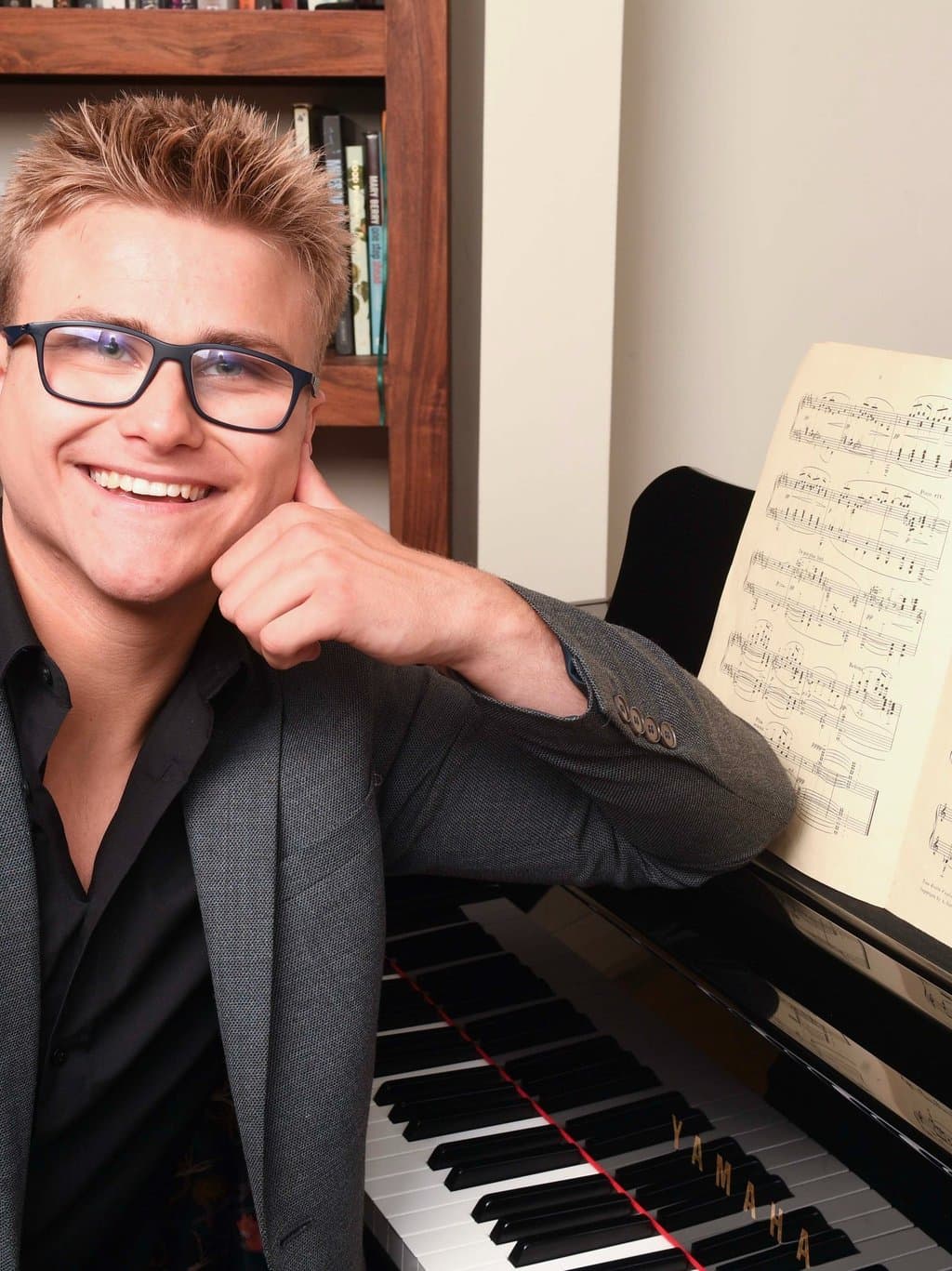
Written by
Norbert Steczkowski
Trinity Laban-trained pianist and piano teacher at Piano with Norbert. Active performer across London. Serving Harrow, Pinner, Stanmore and surrounding areas. More about the team →