
I spend a lot of time talking to parents about practice.
Not because the children are difficult (they rarely are) but because most of us were never taught how to support a child's daily practice without turning it into a battle.
The result is the same scene playing out in homes across Harrow every evening.
A child resisting.
A parent frustrated.
Ten minutes of unwilling playing.
The whole household relieved when it is over.
This is the version of events that ends with the child quitting in year two.
It is also entirely avoidable.
Here is what I have learned watching hundreds of families navigate this.
Why practice battles happen
It is almost never about the piano.
The battle is usually about something else: tiredness, end-of-school-day decompression, a power struggle that has nothing to do with music, or a feeling on the child's part that they are not making progress and the practice is pointless.
Identifying the actual cause is the first step to solving it.
The common pattern
Child does not want to practise.
Parent insists.
Child practises grudgingly for the required time.
Parent feels relieved.
Child associates piano with conflict.
Motivation drops further next week.
Repeat for six months and most children quit, with the parents convinced the child "just wasn't musical".
The five-minute rule
The single biggest change you can make is the threshold.
Drop the practice expectation to five minutes a day, every day, no exceptions.
That's it.
Why this works
Five minutes is short enough that no child can credibly refuse.
Once they sit down, they almost always end up playing for ten or fifteen minutes anyway, because the activation cost has been removed.
Second, the daily-ness of the practice is what builds neural patterns.
The brain consolidates motor learning during sleep, so daily reps wire in faster than infrequent long sessions.
The maths
For a child practising at Grade 1 level, five focused minutes a day genuinely outperforms one hour twice a week.
By the time they get to Grade 3 or 4, the daily practice will naturally extend because the pieces get harder and the child will want to spend longer.
Set up the environment, not the discipline
The single biggest predictor of whether a child practises consistently is whether the piano is somewhere they actually walk past.
If it is in a separate room behind a closed door, it gets ignored.
If it is in the lounge, hallway or kitchen-adjacent space, it gets played.
Specific tactical things that help
- Lid up. A piano with the lid down looks closed. A piano with the lid up looks like furniture wanting to be played.
- Sheet music open at the current piece. Visible cue. No need to find anything.
- Bench at the right height. Adjustable stool ideally. Wrong-height seating creates physical tension that makes practice unpleasant.
- Same time each day if possible. Right after homework. Or just before dinner. The exact time matters less than the consistency.
What to actually say
Avoid:
"Have you done your practice?" (Implies it is a chore.
Sets up confrontation.)
"That sounded wrong, do it again." (You are not their teacher.
This undermines the teacher and makes the child defensive.)
"You used to be good at this, what happened?" (Compares to a past self.
Devastating, even said gently.)
Try instead:
"Want to play me your piece before dinner?" (Implies performance and connection.
Most children love showing off, even reluctantly.)
"I love the bit at the end." (Specific positive reinforcement.
Names something real.)
"I noticed you got that bar right today, that was tricky last week." (Names a specific recent improvement.)
What parents should not do
Don't try to teach
Even if you are a musician yourself.
Especially if you are a musician yourself.
The teacher and parent are different roles, and merging them creates confusion about authority.
If the teacher has asked your child to do something specific and you contradict it, your child loses faith in either the teacher or in you.
Don't require perfection
The point of practice is to get marginally better, not to play flawlessly.
A practice session ending with one bar slightly cleaner than yesterday is a successful session.
Don't extend the practice when it is going well
The instinct is to push through and get more done.
Resist it.
End on a high.
Tomorrow's practice should feel approachable, and that requires today's practice to end before fatigue sets in.
The reward question
Star charts and reward systems can work for very young children (under seven, broadly) but they often backfire later.
The more a child is paid (in stickers, screen time, sweets) for practising, the more they associate practice with extrinsic reward and lose the intrinsic motivation that sustains practice over years.
What works better long-term
Identification with the activity.
The child sees themselves as a person who plays piano.
This is built by giving them performance opportunities (school assemblies, family Christmas, recitals), recording their playing occasionally and showing them the recordings, and letting them choose pieces they actually love.
When to call the teacher
If practice has been a battle for two weeks running, message the teacher.
We can usually identify the specific cause within one lesson.
Common causes:
- Pieces too hard. Easy fix, swap them out.
- Pieces boring. Easy fix, choose new ones together.
- Child has hit a frustrating skill plateau. Needs a small win, can be designed.
- Child is bored of the same exam pieces for too long. Supplement with one fun piece per week.
- Something else going on at home or school. Which we will gently flag and you will know what to do.
The single most useful sentence a parent can send a piano teacher is: "Practice has been a battle this week.
Anything you can do?"
We will adjust the lesson and the child will leave the next session re-engaged.
This is part of what you are paying for.
Frequently asked
How long should my child practise per day?
For ages five to seven, ten minutes a day, five days a week.
For eight to twelve, fifteen to twenty minutes.
For teenagers and serious students, thirty minutes minimum.
Consistency matters far more than total hours.
Should I make my child practise on holidays?
Some practice during holidays helps maintain progress, but it can be reduced.
A 5-minute touch each day on holiday is plenty.
Three weeks off during a long summer holiday is fine.
The child does not lose meaningful progress in that time.
What if my child outright refuses to practise?
If the refusal lasts more than two weeks, message the teacher.
There is almost always a fixable cause.
The worst thing you can do is force the issue daily.
That is how children come to associate piano with parental conflict and quietly quit.
Should I sit with my child while they practise?
For young children (five to seven), yes.
Your presence reassures them and helps them stay focused.
For older children (eight+), often it is better to be in the next room, not actively watching.
Most children practise better when they are not being observed.
If you want to chat through your specific situation, drop us a message or book a trial lesson.
We work with parents every week on this exact problem.
Ready to put this into practice? Book a trial piano lesson with a conservatoire-trained teacher.
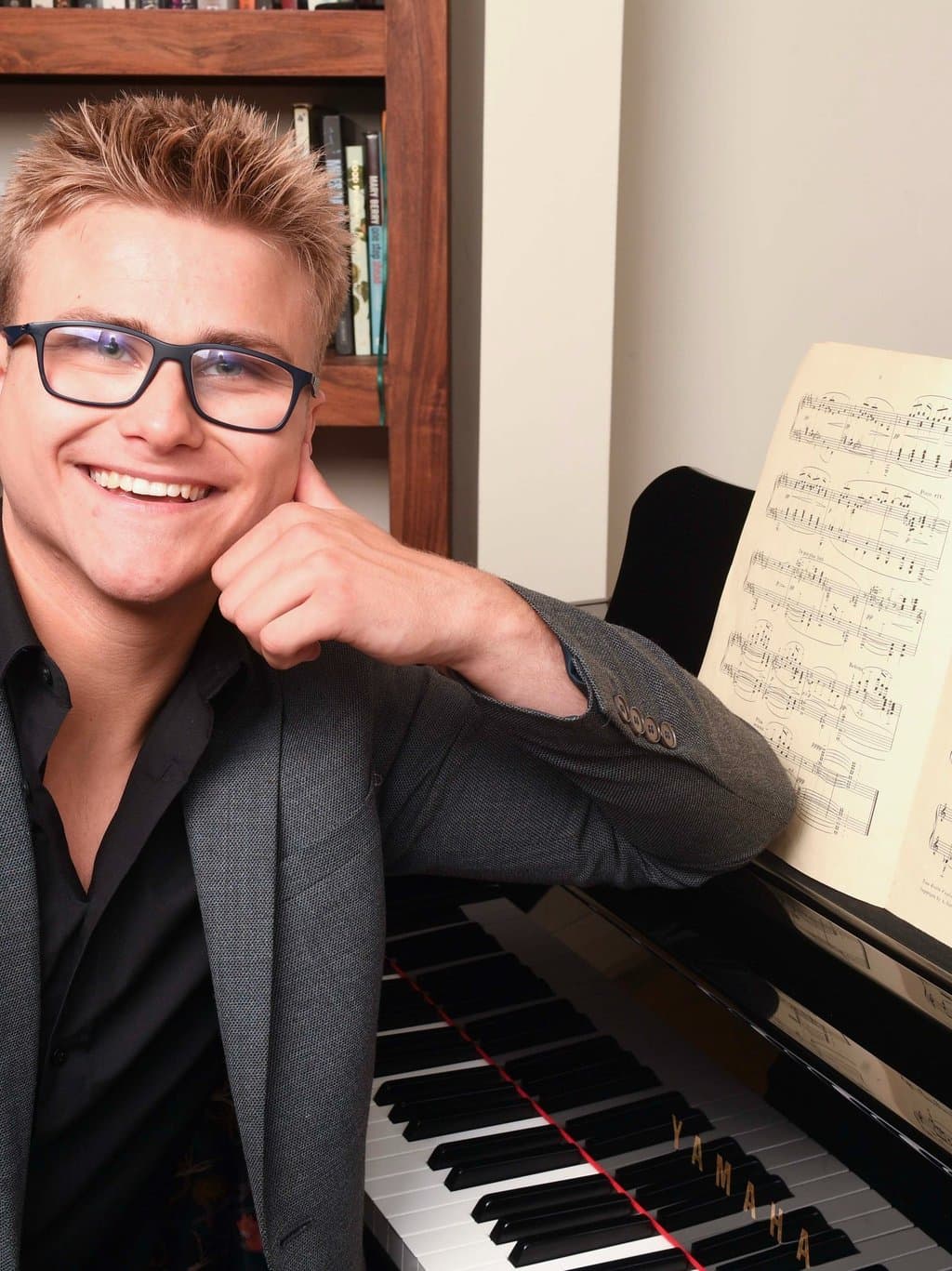
Written by
Norbert Steczkowski
Trinity Laban-trained pianist and piano teacher at Piano with Norbert. Active performer across London. Serving Harrow, Pinner, Stanmore and surrounding areas. More about the team →