Most parents who ask me how long their child should practise expect a single number. Fifteen minutes? Half an hour? An hour? The answer depends on the child's age, where they are in the learning curve, and one factor most people miss: how the brain consolidates motor memory at different ages. After teaching piano in Harrow for the better part of a decade, I have a routine I can give you with conviction.
Here it is, by age, with the reasoning underneath each one.
Ages 7 to 8: Two practice sessions a day, ten minutes each
Yes, two. Not one twenty-minute block. The reason: a seven year old can hold attention on a fine-motor task for about twelve minutes before quality collapses. Once quality collapses, the practice stops being useful and starts being counter-productive (they reinforce sloppy habits at the same rate they would reinforce good ones).
Two ten-minute sessions, ideally one before school and one after, lets the brain consolidate twice instead of once. The same total time, dramatically different result. Children who practise this way in Year 3 are usually a full grade ahead of children who practise twenty minutes in one go by Year 5.
What to do in each session: pick one piece, play it slowly five times, then play it once at tempo. That is the entire ten minutes. Not scales, not theory, not new repertoire. One piece, deeply, twice a day.
Ages 9 to 10: Twenty minutes once a day, structured as three blocks
By nine, the attention span has caught up enough to handle a single longer session. But within that twenty minutes, you want structure, not noodling.
The block I teach:
- Five minutes on technique. Scales, broken chords, finger exercises. The boring stuff that builds the hand.
- Ten minutes on current repertoire. Pick the hardest two bars from a current piece, play them hands-separate at half speed, then hands together at half speed, then slowly at tempo. Repeat the cycle.
- Five minutes on something fun. A favourite piece, a piece they have already mastered, anything that ends the session on a feeling of success.
That last five minutes is non-negotiable. Children who end practice on a piece they enjoy come back the next day. Children who end on the difficult bit dread the next session and start looking for excuses. I have watched this pattern play out across hundreds of students. It is the single biggest determinant of whether a child stays at the piano past the first year.
Ages 11 to 12: Thirty minutes, daily, with one weekly long session
By eleven, the brain can handle thirty minutes of focused practice. By twelve, students preparing for ABRSM Grade 3 or Trinity Grade 2 should be doing it daily.
The structure tightens up:
- Ten minutes on scales, broken chords and arpeggios for the current grade.
- Fifteen minutes on exam repertoire, three pieces rotated through the week (one piece per day in detail, all three played through every day).
- Five minutes on sight-reading or aural training. Most students neglect these and pay for it on exam day.
And add one weekly forty-five minute session, usually a weekend morning, where the student plays through everything from start to finish at tempo. This is the rehearsal of the whole, not the practice of the parts. Most students never do this and walk into exams having never played their pieces back to back in one sitting. Then they wonder why their stamina collapses by piece three.
The thing nobody tells you about practice frequency
Six days a week beats seven. The brain consolidates motor learning during rest periods, and one day off per week genuinely improves the next session. The mistake is having two or three days off in a row, which is when the previous week's progress starts evaporating.
If your child cannot practise on a given day (illness, exhaustion, an unusually long school day), it is far better to skip cleanly and do a normal session the next day than to force a five-minute resentment session. Skipping protects the love of the instrument. Forcing erodes it.
How to know if your child is practising enough
Forget minutes. Look for these three signals:
- They occasionally play without being asked. Not every day, but every couple of weeks. If a child never voluntarily approaches the piano outside structured practice time, the practice is too long, too hard, or both.
- They can play their current piece for a relative without falling apart. This is the real test of whether a piece is learnt. If they can only play it when they are concentrating, it is not yet in their hands; it is still in their head.
- They are not visibly improving in week-by-week increments. Real progress at this age comes in monthly leaps. Trying to measure progress week to week leads parents (and students) to feel demoralised. Look at where they were three months ago.
How parents can help without being teachers
This is the question I get asked most. Three rules, in order of importance:
1. Be in the room, but not over the shoulder. Children practise meaningfully better when a parent is in earshot, working on something else, than when they practise alone in a closed room. The presence is the point, not the supervision.
2. Praise the practice, not the piece. 'You sat down and did your fifteen minutes today' is far more useful than 'that piece sounded great.' The first reinforces the habit; the second sets up a comparison the child loses next time.
3. Don't try to correct. If you can hear something is wrong, write it down and send it to your teacher. Parents who try to correct technique they don't have the language for (hand position, fingering, articulation) almost always make it worse. The teacher's job is to correct. The parent's job is to protect the time.
Common pitfalls and how to fix them
From years of teaching at our Harrow studio and across HA1 to HA8, here are the patterns that derail practice most reliably:
- Practising right after school. Most children are mentally cooked by 4pm. A short snack and twenty minutes of unstructured time first, then practice. The session that follows is twice as productive.
- A piano in a quiet, formal room. Pianos in front rooms get played less than pianos in kitchens. Make the instrument part of the household, not a special-occasion object.
- No metronome. A £10 digital metronome on the music stand transforms practice quality in a way nothing else does. Half the bad piano playing I see is rhythmic.
- Too many pieces at once. Three pieces is the maximum for any child under Grade 3. More than that and nothing gets learnt properly. Talk to your teacher about pruning the repertoire if this is happening.
- Practising sitting too low. Almost every child I meet for the first time is sitting too low for their height. The forearm should be parallel to the floor or slightly higher. A cushion (or two) is fine; what matters is the elbow angle.
When practice still is not working
If you have tried the routine that suits your child's age for a month and they are still resistant, the most common cause is not the routine itself; it is one of three things:
- The repertoire they are working on is not at the right level (usually too hard, sometimes too easy).
- The teacher's pacing doesn't match the child's pace.
- The child has decided, often without saying so, that they are bad at piano.
All three are fixable, and they are usually fixable in a single conversation with the right teacher.
If you want this routine in PDF form
I have written it out as a 12-page 4-Week Piano Practice Plan for Parents, with a printable Fridge Tracker your child can tick off each day. It is free, no email signup, just the PDF.
If you want to talk about your specific child (or yourself, if you are learning), a £10 trial lesson is the cleanest way. Thirty minutes at the piano with one of our conservatoire-trained teachers, in our Harrow studio or online. An honest read of where things are, a plan for the next four weeks, no pressure to commit.
You might also find the Complete Piano Scales Guide useful for the scales part of practice. Every major and minor scale, ABRSM-standard fingerings, with keyboard diagrams.
Whichever way it goes, the routine above will get most children further than they would on their own. Use it.
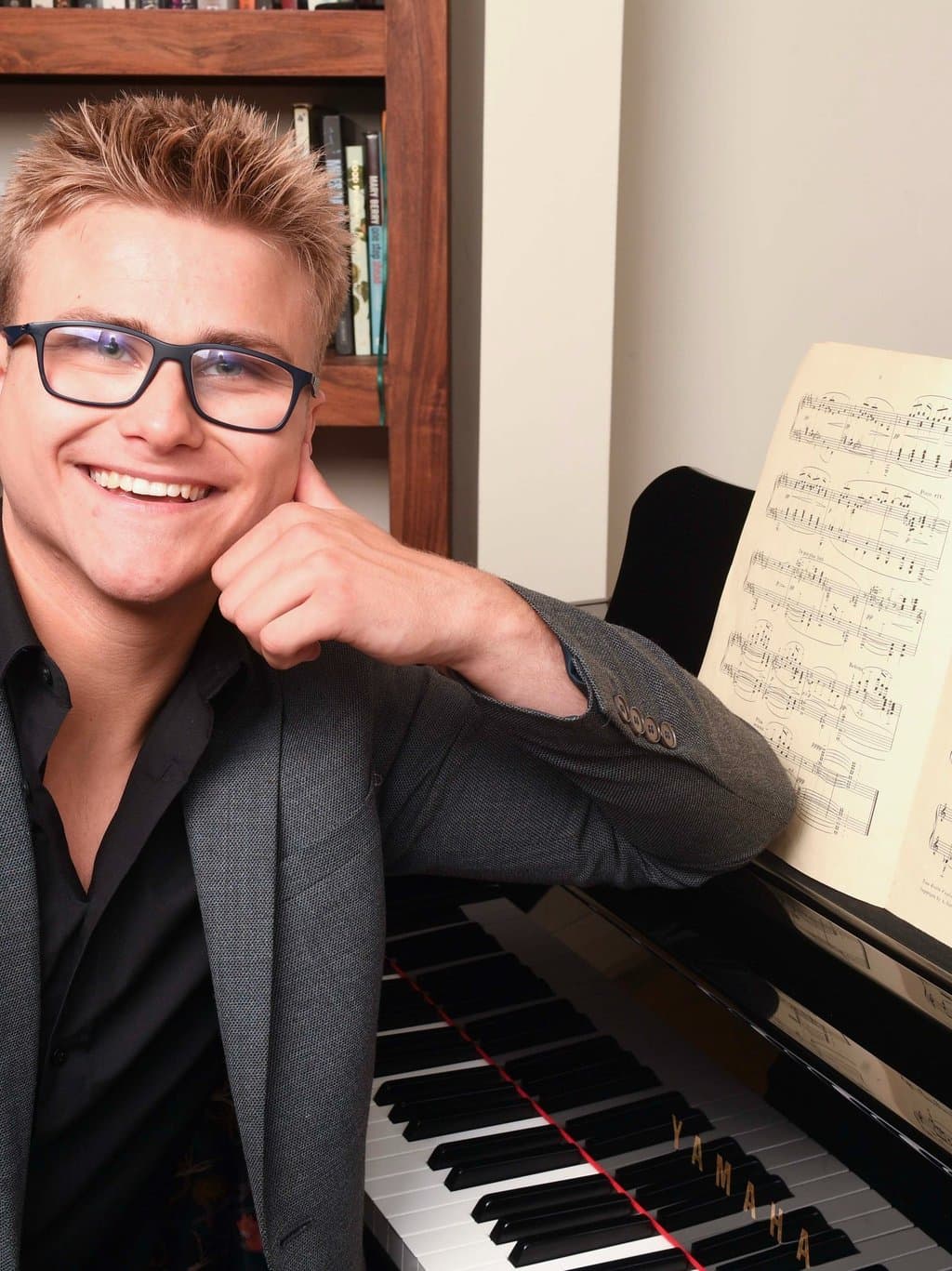
Norbert Steczkowski runs Piano with Norbert, a piano teaching studio in Harrow with Trinity Laban-trained and BIMM-trained teachers. Over 90 per cent of his students pass ABRSM and Trinity exams with merit or distinction. He has performed at the Royal Albert Hall and still plays publicly.
Ready to put this into practice? Book a trial piano lesson with a conservatoire-trained teacher.
Written by
Norbert Steczkowski
Trinity Laban-trained pianist and piano teacher at Piano with Norbert. Active performer across London. Serving Harrow, Pinner, Stanmore and surrounding areas. More about the team →