Beginner Notes · 8 Pages · For Adults & Parents

5 things to know before you start the piano.

What conservatoire-trained teachers wish every beginner understood from day one. Five tips, not thirteen. Each with the reasoning behind it.

Read it online ↓

One email field, one click. The PDF lands in your inbox. A4 · Reads cleanly on a phone too.

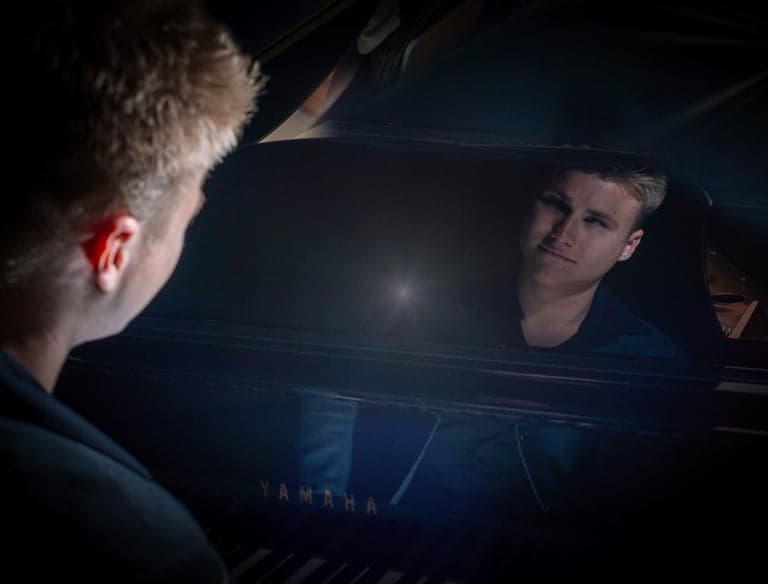
A piano student practising at home

The five tips

Read these once, and you will start two months ahead.

We picked the five things our students most often wish they had known earlier. Each one is short enough to read in a couple of minutes, with the conservatoire reasoning behind it.

01

The instrument you start on matters less than you think.

A new piano student does not need a Steinway. They do not even need an acoustic. A weighted-key digital piano with at least 88 keys, ideally with a sustain pedal, is enough for the first three years. Roland, Yamaha and Kawai all make perfectly good ones from around £400 new.

What matters more than the brand is two practical things. First, that the keys are weighted — touch-sensitive plastic toys do not teach the hand anything useful and reinforce a flat finger position that takes months to undo later. Second, that the piano lives somewhere your child or you can sit at it without ceremony. A piano in a quiet corner of the kitchen gets played. A piano in a formal sitting room often does not.

The day you genuinely want an acoustic is the day your existing instrument starts to feel limiting under your fingers. For most students that is around Grade 3, two to three years in. Buying an upright before then is rarely the bottleneck.

02

The first thirty days are about habit, not progress.

Most beginners measure their first month by what they can play, and feel disheartened. Two pieces and a five-finger pattern is not very much to show for a month. But that is the wrong metric.

What the first month is actually building is a habit: the sequence of sitting down at the piano, opening the book, looking at the same line of music, and playing for ten or fifteen minutes. The neurological work is in the repetition of arriving at the piano, not in the music itself. We tell new students that if they have practised five days a week for the first month, the rest is mostly automatic.

The students who stick with it for years are not the ones who practised hardest in week one. They are the ones who got the practice habit anchored to something else in their day (after school and before dinner; before work, with the coffee; on the way upstairs to bed). The habit comes first, the progress follows. In reverse order, neither usually arrives.

03

Adult learners and child learners need different things.

About a third of the people we teach are adults, and the curriculum we use with them is almost entirely different from the one we use with children. Adults usually have a specific motivation: a piece they have always wanted to play, an exam they want to take, a hobby they have been promising themselves for years. Children rarely do; they have arrived at the piano because their parents decided.

The practical consequence is that adult lessons start with the music the adult actually wants to play, and we backfill the technique to enable it. A 35-year-old who came in wanting to play Einaudi will be playing a simplified Einaudi piece within three weeks, with the scales and theory smuggled in around it. A child of seven, with no specific motivation, needs the opposite structure: simple repertoire that builds steadily, with the goal-setting handled by the teacher and parent.

Mixing the two approaches is where most self-taught adult learners get stuck. They start with a method book designed for children, find it patronising, and quit. The way back in is to find a teacher (or a resource) that takes adult learning seriously.

04

Choose a teacher who still plays in front of audiences.

Music is performed; it is not theorised. A piano teacher who has not played for an audience in fifteen years is teaching the piano from memory, and that memory is older than the instrument they are teaching.

Both of our teachers still perform. Norbert has performed at the Royal Albert Hall and continues to play professionally as a jazz and classical pianist. Declan plays in bands and accompanies singers around London. The reason we mention this is not bragging; it is that an active performer teaches differently. They know what nerves do, they know what stage lighting does to your sight-reading, they know how a piece you have practised cleanly for a month can disintegrate in the first two bars under pressure. They teach to that reality, not to a textbook version of it.

When you are choosing a teacher, ask them when they last performed, where, and what they played. The answers tell you more than their qualifications do.

05

ABRSM and Trinity are not compulsory, but they change the game.

Music exams are optional. Plenty of pianists never sit one, and several of the most accomplished musicians we know never took a grade. Whether you sit them or not is a choice.

But there is a real argument for taking them, even if you are an adult who plans to play purely for pleasure. The ABRSM and Trinity syllabi exist because the people who designed them, over a century of refinement, have figured out the most efficient sequence in which to learn the piano. Each grade introduces specific technical, theoretical and musical demands in an order that mostly works. Following the syllabus, even without sitting the actual exam, gives a student a curriculum that has been stress-tested by millions of others.

And if you do sit the exam, the deadline is genuinely useful. Most students who sit Grade 1 in April practise differently in March than they did in February. The structure is the point; the certificate is the side effect. Our students pass ABRSM and Trinity with merit or distinction over 90 per cent of the time, and we credit the structure of the exams (and the practice habits they force) for almost all of that.

Who wrote this

Norbert Steczkowski, Trinity Laban Conservatoire.

Royal Albert Hall performer. Teaches piano in Harrow, London. Over 90 per cent of our students pass ABRSM, Trinity and RSL exams with merit or distinction. Declan Rafton (BIMM London, 10+ years teaching) co-runs the studio.

Read more about our teachers →

Common questions

Things people ask

Is this for adults or children?

+
Both, but the tone is written for the adult reader (either a parent reading about a child’s first piano lessons, or an adult learner reading about their own). Children would not get much from reading it directly.

Do I need to read the PDF, or is the web page enough?

+
The web page is the full content. The PDF is the same material formatted for printing or reading offline. Pick whichever suits you. If you are at the piano and want a quick reference, the PDF on a phone or tablet sits next to the music stand better than a browser tab.

How is this different from the practice plan?

+
This is the pre-lesson briefing — five things to understand before you or your child sit down at the instrument for the first time. The 4-Week Practice Plan is the routine for what to do once lessons have started. They pair well, but the order matters: read this first, use the plan once lessons begin.

Why five tips and not ten?

+
Because five well-argued points beat ten thin ones. Most beginner-tips articles online run to twelve or thirteen entries because the writer wanted to seem comprehensive. We picked the five that get repeated most often in our actual lessons. The rest are noise.

Ready to start?

A £10 trial lesson is the obvious next step.

Thirty minutes at the piano with one of our conservatoire-trained teachers. Studio in Harrow, in-home across HA1 to HA8, or online from anywhere in the UK.

Book a £10 trial →
Book £10 Trial