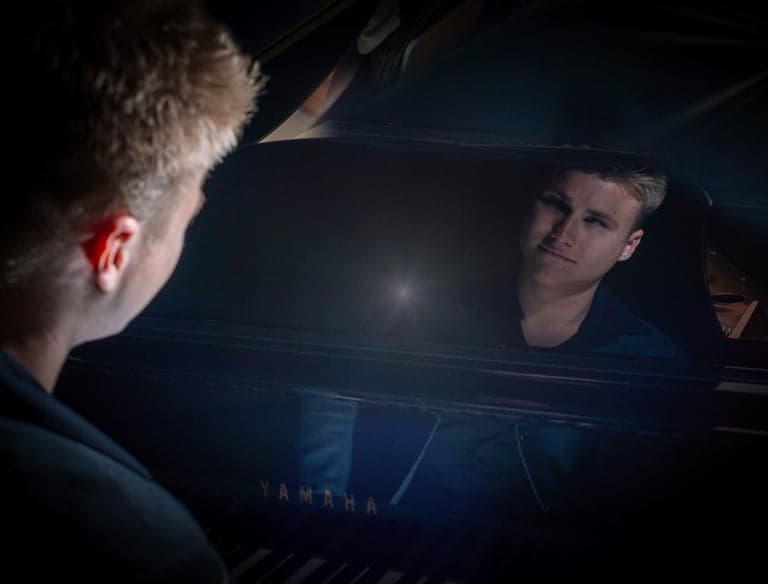
Every major and minor scale, all three minor forms, with fingering, key signatures and clearly labelled keyboard diagrams. A 43-page reference written by a Trinity Laban-trained pianist.
In circle-of-fifths order, with fingering, key signatures and keyboard diagrams.
36
Minor scale forms
All three forms (natural, harmonic and melodic) for every minor key.
5
Reference tables
Quick-lookup tables for majors, naturals, harmonics, melodics, and the circle of fifths.
60+
Scale diagrams
Every scale shown across two octaves with the notes highlighted in gold.
How to read this guide
A scale is a ladder of notes built on a starting pitch.
The distance between each rung (the interval) is what gives the scale its character. Almost every piece of music a piano student plays is built from a handful of these ladders.
This guide uses four interval patterns:
Major: W-W-H-W-W-W-H
Natural minor: W-H-W-W-H-W-W
Harmonic minor: W-H-W-W-H-A²-H (raised 7th)
Melodic minor (asc): W-H-W-W-W-W-H (raised 6 + 7)
Fingering: 1 = thumb, 2 = index, 3 = middle, 4 = ring, 5 = little. The fingering grid beneath each diagram shows the right and left hand directly under their matching note.
Practise: hands separately first, slow with a metronome at 60 BPM, one note per click. Hands together once each hand is even. Two octaves before four.
Outer ring: majors. Inner ring: their relative minors. Move clockwise to add a sharp; anticlockwise to add a flat.
Part one
The twelve major scales
In circle-of-fifths order, starting with C, then the sharp keys clockwise (G, D, A, E, B, F♯/G♭), then back through the flats (D♭, A♭, E♭, B♭, F).
Major · No sharps or flats
C major
Relative minor: A minor
C major scale notes: C, D, E, F, G, A, B, C. Right-hand fingering 1-2-3-1-2-3-4-5. Left-hand fingering 5-4-3-2-1-3-2-1.
Notes
C
D
E
F
G
A
B
C
RH
1
2
3
1
2
3
4
5
LH
5
4
3
2
1
3
2
1
Open and unambiguous. The reference point every other scale is heard against.
Major · 1 sharp · F♯
G major
Relative minor: E minor
G major scale notes: G, A, B, C, D, E, F♯, G. Right-hand fingering 1-2-3-1-2-3-4-5. Left-hand fingering 5-4-3-2-1-3-2-1.
Notes
G
A
B
C
D
E
F♯
G
RH
1
2
3
1
2
3
4
5
LH
5
4
3
2
1
3
2
1
Bright and outdoorsy. The key Mozart reached for when he wanted something cheerful without effort.
Major · 2 sharps · F♯, C♯
D major
Relative minor: B minor
D major scale notes: D, E, F♯, G, A, B, C♯, D. Right-hand fingering 1-2-3-1-2-3-4-5. Left-hand fingering 5-4-3-2-1-3-2-1.
Notes
D
E
F♯
G
A
B
C♯
D
RH
1
2
3
1
2
3
4
5
LH
5
4
3
2
1
3
2
1
Triumphant and resonant on the piano. The key of countless symphonic finales.
Major · 3 sharps · F♯, C♯, G♯
A major
Relative minor: F♯ minor
A major scale notes: A, B, C♯, D, E, F♯, G♯, A. Right-hand fingering 1-2-3-1-2-3-4-5. Left-hand fingering 5-4-3-2-1-3-2-1.
Notes
A
B
C♯
D
E
F♯
G♯
A
RH
1
2
3
1
2
3
4
5
LH
5
4
3
2
1
3
2
1
Warm and lyrical. Sits comfortably under the right hand of almost every singer-songwriter.
Major · 4 sharps · F♯, C♯, G♯, D♯
E major
Relative minor: C♯ minor
E major scale notes: E, F♯, G♯, A, B, C♯, D♯, E. Right-hand fingering 1-2-3-1-2-3-4-5. Left-hand fingering 5-4-3-2-1-3-2-1.
Notes
E
F♯
G♯
A
B
C♯
D♯
E
RH
1
2
3
1
2
3
4
5
LH
5
4
3
2
1
3
2
1
Bold and burnished. Chopin chose it for his most affirming nocturnes.
Major · 5 sharps · F♯, C♯, G♯, D♯, A♯
B major
Relative minor: G♯ minor
B major scale notes: B, C♯, D♯, E, F♯, G♯, A♯, B. Right-hand fingering 1-2-3-1-2-3-4-5. Left-hand fingering 4-3-2-1-4-3-2-1.
Notes
B
C♯
D♯
E
F♯
G♯
A♯
B
RH
1
2
3
1
2
3
4
5
LH
4
3
2
1
4
3
2
1
Velvet and slightly aloof. Five sharps put just enough resistance under the hand to feel luxurious.
Watch out for the left-hand fingering: groups of four (4-3-2-1, 4-3-2-1) rather than the usual 5-4-3-2-1-3-2-1, because the thumb must keep clear of the run of black keys.
Noble and broad: the heroic key of Beethoven’s "Eroica" and many concertos.
Watch out for the right hand starts on finger 3; thumbs land only on F and C (the two whites).
Major · 2 flats · B♭, E♭
B♭ major
Relative minor: G minor
B♭ major scale notes: B♭, C, D, E♭, F, G, A, B♭. Right-hand fingering 4-1-2-3-1-2-3-4. Left-hand fingering 3-2-1-4-3-2-1-3.
Notes
B♭
C
D
E♭
F
G
A
B♭
RH
4
1
2
3
1
2
3
4
LH
3
2
1
4
3
2
1
3
Easy-going and woodwind-friendly: the home key for almost every jazz standard.
Watch out for the right hand begins on finger 4, then thumbs across to C. Both hands avoid the thumb on a black key.
Major · 1 flat · B♭
F major
Relative minor: D minor
F major scale notes: F, G, A, B♭, C, D, E, F. Right-hand fingering 1-2-3-4-1-2-3-4. Left-hand fingering 5-4-3-2-1-3-2-1.
Notes
F
G
A
B♭
C
D
E
F
RH
1
2
3
4
1
2
3
4
LH
5
4
3
2
1
3
2
1
Pastoral and warm. F major is one of the friendliest keys to read and play; the only complication is that single B♭.
Watch out for the right hand uses 1-2-3-4-1-2-3-4 rather than the usual 1-2-3-1-2-3-4-5, because the thumb must avoid B♭.
Part two
The twelve minor keys
Each key in all three forms: natural, harmonic and melodic. The notes that change from the natural form (the raised 7th in harmonic, the raised 6th and 7th in melodic ascending) are highlighted in teal.
Minor · No sharps or flats
A minor
Relative major: C major
Natural minor
Notes
A
B
C
D
E
F
G
A
RH
1
2
3
1
2
3
4
5
LH
5
4
3
2
1
3
2
1
Harmonic minor · raised 7th
Notes
A
B
C
D
E
F
G♯
A
RH
1
2
3
1
2
3
4
5
LH
5
4
3
2
1
3
2
1
Melodic minor · raised 6th & 7th ascending
Ascending (raised 6 & 7)
Notes
A
B
C
D
E
F♯
G♯
A
RH
1
2
3
1
2
3
4
5
LH
5
4
3
2
1
3
2
1
Descending (= natural minor)
Notes
A
G
F
E
D
C
B
A
RH
5
4
3
2
1
3
2
1
LH
1
2
3
1
2
3
4
5
Quiet, modal, slightly unresolved: the same notes as C major but every phrase falls toward A instead of climbing toward C.
Minor · 1 sharp · F♯
E minor
Relative major: G major
Natural minor
Notes
E
F♯
G
A
B
C
D
E
RH
1
2
3
1
2
3
4
5
LH
5
4
3
2
1
3
2
1
Harmonic minor · raised 7th
Notes
E
F♯
G
A
B
C
D♯
E
RH
1
2
3
1
2
3
4
5
LH
5
4
3
2
1
3
2
1
Melodic minor · raised 6th & 7th ascending
Ascending (raised 6 & 7)
Notes
E
F♯
G
A
B
C♯
D♯
E
RH
1
2
3
1
2
3
4
5
LH
5
4
3
2
1
3
2
1
Descending (= natural minor)
Notes
E
D
C
B
A
G
F♯
E
RH
5
4
3
2
1
3
2
1
LH
1
2
3
1
2
3
4
5
Folk-music dark: the key of countless Russian and Eastern European laments because the harmonic form sits so heavily in the hand.
Minor · 2 sharps · F♯, C♯
B minor
Relative major: D major
Natural minor
Notes
B
C♯
D
E
F♯
G
A
B
RH
1
2
3
1
2
3
4
5
LH
4
3
2
1
4
3
2
1
Harmonic minor · raised 7th
Notes
B
C♯
D
E
F♯
G
A♯
B
RH
1
2
3
1
2
3
4
5
LH
4
3
2
1
4
3
2
1
Melodic minor · raised 6th & 7th ascending
Ascending (raised 6 & 7)
Notes
B
C♯
D
E
F♯
G♯
A♯
B
RH
1
2
3
1
2
3
4
5
LH
4
3
2
1
4
3
2
1
Descending (= natural minor)
Notes
B
A
G
F♯
E
D
C♯
B
RH
5
4
3
2
1
3
2
1
LH
1
2
3
4
1
2
3
4
Mournful and elevated. Bach’s Mass in B minor is named after this key for good reason.
Minor · 3 sharps · F♯, C♯, G♯
F♯ minor
Relative major: A major
Natural minor
Notes
F♯
G♯
A
B
C♯
D
E
F♯
RH
2
3
4
1
2
3
1
2
LH
4
3
2
1
3
2
1
4
Harmonic minor · raised 7th
Notes
F♯
G♯
A
B
C♯
D
E♯
F♯
RH
2
3
4
1
2
3
1
2
LH
4
3
2
1
3
2
1
4
Melodic minor · raised 6th & 7th ascending
Ascending (raised 6 & 7)
Notes
F♯
G♯
A
B
C♯
D♯
E♯
F♯
RH
2
3
4
1
2
3
1
2
LH
4
3
2
1
3
2
1
4
Descending (= natural minor)
Notes
F♯
E
D
C♯
B
A
G♯
F♯
RH
2
1
3
2
1
4
3
2
LH
4
1
2
3
1
2
3
4
Aching and introspective. Rachmaninov’s most famous Prelude lives here.
Minor · 4 sharps · F♯, C♯, G♯, D♯
C♯ minor
Relative major: E major
Natural minor
Notes
C♯
D♯
E
F♯
G♯
A
B
C♯
RH
3
1
2
3
1
2
3
4
LH
3
2
1
4
3
2
1
3
Harmonic minor · raised 7th
Notes
C♯
D♯
E
F♯
G♯
A
B♯
C♯
RH
3
1
2
3
1
2
3
4
LH
3
2
1
4
3
2
1
3
Melodic minor · raised 6th & 7th ascending
Ascending (raised 6 & 7)
Notes
C♯
D♯
E
F♯
G♯
A♯
B♯
C♯
RH
3
1
2
3
1
2
3
4
LH
3
2
1
4
3
2
1
3
Descending (= natural minor)
Notes
C♯
B
A
G♯
F♯
E
D♯
C♯
RH
4
3
2
1
3
2
1
3
LH
3
1
2
3
4
1
2
3
Hushed and brooding. Beethoven’s "Moonlight" Sonata is the immediate association; that lapping triplet figure is in this key.
The harmonic form introduces a double-sharp on F (F𝄪 = G), one of the very few places piano students meet this notation. A♭ minor is more often used as a transient passing key than a destination.
Minor · 6 flats · B♭, E♭, A♭, D♭, G♭, C♭ or 6 sharps
E♭ minor / D♯ minor
Relative major: G♭ major / F♯ major
Natural minor
Notes
E♭
F
G♭
A♭
B♭
C♭
D♭
E♭
RH
3
1
2
3
1
2
3
4
LH
2
1
4
3
2
1
3
2
Harmonic minor · raised 7th
Notes
E♭
F
G♭
A♭
B♭
C♭
D
E♭
RH
3
1
2
3
1
2
3
4
LH
2
1
4
3
2
1
3
2
Melodic minor · raised 6th & 7th ascending
Ascending (raised 6 & 7)
Notes
E♭
F
G♭
A♭
B♭
C
D
E♭
RH
3
1
2
3
1
2
3
4
LH
2
1
4
3
2
1
3
2
Descending (= natural minor)
Notes
E♭
D♭
C♭
B♭
A♭
G♭
F
E♭
RH
4
3
2
1
3
2
1
3
LH
2
3
1
2
3
4
1
2
Enharmonic spelling (D♯ minor natural):D♯ · E♯ · F♯ · G♯ · A♯ · B · C♯ · D♯
Deep and resonant: the Chopin "Funeral March" passing chord and the heart of much late Romantic piano writing.
Minor · 5 flats · B♭, E♭, A♭, D♭, G♭
B♭ minor
Relative major: D♭ major
Natural minor
Notes
B♭
C
D♭
E♭
F
G♭
A♭
B♭
RH
2
3
1
2
3
4
1
2
LH
3
2
1
4
3
2
1
3
Harmonic minor · raised 7th
Notes
B♭
C
D♭
E♭
F
G♭
A
B♭
RH
2
3
1
2
3
4
1
2
LH
3
2
1
4
3
2
1
3
Melodic minor · raised 6th & 7th ascending
Ascending (raised 6 & 7)
Notes
B♭
C
D♭
E♭
F
G
A
B♭
RH
2
3
1
2
3
4
1
2
LH
3
2
1
4
3
2
1
3
Descending (= natural minor)
Notes
B♭
A♭
G♭
F
E♭
D♭
C
B♭
RH
2
1
4
3
2
1
3
2
LH
3
1
2
3
4
1
2
3
Saturated and dramatic: the home key of Chopin’s Funeral March and Rachmaninov’s 2nd Piano Sonata.
Minor · 4 flats · B♭, E♭, A♭, D♭
F minor
Relative major: A♭ major
Natural minor
Notes
F
G
A♭
B♭
C
D♭
E♭
F
RH
1
2
3
4
1
2
3
4
LH
5
4
3
2
1
3
2
1
Harmonic minor · raised 7th
Notes
F
G
A♭
B♭
C
D♭
E
F
RH
1
2
3
4
1
2
3
4
LH
5
4
3
2
1
3
2
1
Melodic minor · raised 6th & 7th ascending
Ascending (raised 6 & 7)
Notes
F
G
A♭
B♭
C
D
E
F
RH
1
2
3
4
1
2
3
4
LH
5
4
3
2
1
3
2
1
Descending (= natural minor)
Notes
F
E♭
D♭
C
B♭
A♭
G
F
RH
4
3
2
1
4
3
2
1
LH
1
2
3
1
2
3
4
5
Anguished and noble. Beethoven’s Appassionata Sonata lives in this key; so does much of his most turbulent writing.
Minor · 3 flats · B♭, E♭, A♭
C minor
Relative major: E♭ major
Natural minor
Notes
C
D
E♭
F
G
A♭
B♭
C
RH
1
2
3
1
2
3
4
5
LH
5
4
3
2
1
3
2
1
Harmonic minor · raised 7th
Notes
C
D
E♭
F
G
A♭
B
C
RH
1
2
3
1
2
3
4
5
LH
5
4
3
2
1
3
2
1
Melodic minor · raised 6th & 7th ascending
Ascending (raised 6 & 7)
Notes
C
D
E♭
F
G
A
B
C
RH
1
2
3
1
2
3
4
5
LH
5
4
3
2
1
3
2
1
Descending (= natural minor)
Notes
C
B♭
A♭
G
F
E♭
D
C
RH
5
4
3
2
1
3
2
1
LH
1
2
3
1
2
3
4
5
Stern and fated. Beethoven returned to this key whenever he wanted to start with a struggle: the 5th Symphony, the Pathétique Sonata, the C minor Concerto.
Minor · 2 flats · B♭, E♭
G minor
Relative major: B♭ major
Natural minor
Notes
G
A
B♭
C
D
E♭
F
G
RH
1
2
3
1
2
3
4
5
LH
5
4
3
2
1
3
2
1
Harmonic minor · raised 7th
Notes
G
A
B♭
C
D
E♭
F♯
G
RH
1
2
3
1
2
3
4
5
LH
5
4
3
2
1
3
2
1
Melodic minor · raised 6th & 7th ascending
Ascending (raised 6 & 7)
Notes
G
A
B♭
C
D
E
F♯
G
RH
1
2
3
1
2
3
4
5
LH
5
4
3
2
1
3
2
1
Descending (= natural minor)
Notes
G
F
E♭
D
C
B♭
A
G
RH
5
4
3
2
1
3
2
1
LH
1
2
3
1
2
3
4
5
Restless and slightly tragic. Mozart reserved this key for his most personal music (the G minor Symphony No. 40, the G minor Piano Quartet).
Minor · 1 flat · B♭
D minor
Relative major: F major
Natural minor
Notes
D
E
F
G
A
B♭
C
D
RH
1
2
3
1
2
3
4
5
LH
5
4
3
2
1
3
2
1
Harmonic minor · raised 7th
Notes
D
E
F
G
A
B♭
C♯
D
RH
1
2
3
1
2
3
4
5
LH
5
4
3
2
1
3
2
1
Melodic minor · raised 6th & 7th ascending
Ascending (raised 6 & 7)
Notes
D
E
F
G
A
B
C♯
D
RH
1
2
3
1
2
3
4
5
LH
5
4
3
2
1
3
2
1
Descending (= natural minor)
Notes
D
C
B♭
A
G
F
E
D
RH
5
4
3
2
1
3
2
1
LH
1
2
3
1
2
3
4
5
Solemn and ceremonial: the key of the Mozart Requiem and Bach’s Chaconne. The harmonic form’s raised C♯ is the sound of resignation tipping toward grandeur.
Who wrote this
A piano teacher, not an app.
I’m Norbert Steczkowski. I trained at the Trinity Laban Conservatoire of Music and Dance in London and have performed at the Royal Albert Hall. I run Piano with Norbert, an in-home piano school in Harrow where over 90 per cent of our students pass ABRSM and Trinity exams with merit or distinction.
This guide is the reference I wish every one of my students had when they started. It is free because scales should not be paywalled.
Both. Beginners use the keyboard diagrams to see which keys to press and the aligned fingering grid to know which finger goes where. Intermediate students use it for ABRSM and Trinity exam preparation. Advanced players use the reference tables for quick lookup of less-familiar keys.
What fingering convention do you use?
+
ABRSM Grade 1 to 5 Piano Scales & Broken Chords standard fingerings throughout. Where editions diverge slightly (the most-cited case being C♯ minor left-hand), the convention from current ABRSM publications is the one shown.
Why do some notes appear in teal?
+
Teal marks the raised 6th and 7th degrees in harmonic and melodic minor scales. Those are the notes that change from the natural minor, so flagging them visually saves you re-counting the intervals each time.
Do I need to print it?
+
Not at all. The PDF is designed to print cleanly on A4 if you want a paper reference, but it reads just as well on a tablet or phone. The web version of this page contains the full content too.
Can I use this in lessons with my own teacher?
+
Yes, please do. The fingerings are the standard ABRSM ones, so any classically trained teacher will recognise them immediately. If your teacher uses a slightly different fingering for a particular scale, follow theirs in lessons; consistency matters more than which standard.
How does this compare to the official ABRSM scales book?
+
Same fingerings, same notes, same key signatures. What this guide adds: a keyboard diagram alongside each scale, character notes for every key (so you remember what each one sounds like), and the full content free of charge. It’s a complement to the ABRSM book, not a replacement.
Want help applying this?
Try a £10 piano trial, in person or online.
Thirty minutes at the piano with one of our conservatoire-trained teachers, in your own home across HA1 to HA8 or online from anywhere in the UK. Bring this guide and we will look at your scales specifically, find your level, and write you a plan for the first four lessons.
5.0 stars from 30+ families · 90% pass ABRSM with merit or distinction · Trinity Laban trained