If you have never booked a piano lesson before, the trial format is a fair bit shorter and less formal than you might expect. This is a walk-through of what happens in our trial: who it suits, what we cover, what we send afterwards, and what we deliberately do not do. We have run a lot of these now, so the pattern is reliable.
Who the trial is for
Almost everyone, with one practical exception. The trial works for children aged four upwards, for teenagers picking the piano up for the first time, for adult complete beginners, for adult returners who put the piano down at Grade 3 or Grade 5 years ago, and for advanced students considering switching teachers. The only group we sometimes redirect is children under four: readiness varies more than age does at that point, and we will tell you honestly at the trial whether the timing is right.
You do not need to have played before. You do not need to own a piano. You do not need to bring anything except a sense of what you (or your child) want from learning. If you are the parent of a young child who has never sat at a piano, that is the standard situation we expect. The pace and content of the lesson is built around it.
The price, plainly
The trial is £10 for thirty minutes. The price is the same regardless of age, prior experience, or whether you book at the studio or online. We charge a small token amount rather than running the trial free because it changes who turns up. A free lesson attracts curious browsers who do not show; a £10 lesson attracts people who are genuinely considering starting. Both for you and for us, that filter is useful.
You pay online when you book through the calendar on our contact page. The slot is confirmed instantly. We do not take card details over the phone, and we never ask for them by email.
Before the lesson: what to do (and what not to do)
Three short things help. First, decide who the lesson is actually for. If you are booking for a child, the child sits at the piano; you sit and watch. We will introduce ourselves to both of you, but the lesson is the child's. If you are booking for yourself as an adult, you sit at the piano; if there is a partner who wants to listen in, that is also fine. The decision of who the player is matters for the first ninety seconds and we want it clear before we start.
Second, if there is anything specific you want from the lesson, say so when you book or in the first minute. Common examples: "my daughter has had a year of school recorder and we want to know if she is ready to switch to piano", or "I had piano lessons until Grade 3 in 1992 and I want to know how rusty I am". Anything that gives us a starting point. We can run the trial blind, but it is faster and more useful with a sentence of context.
Third, do not try to practise anything in advance. This is genuinely the most common thing parents do, and it is well-meant but unhelpful. If a child has watched a YouTube video and learned the right hand of a tune the night before the trial, we cannot see what their hand position is like cold, which is the most useful diagnostic we get in the first five minutes. Come as you are.
What we cover in the thirty minutes
The shape of the lesson, in rough order:
- First two minutes are introductions. We ask the student what kind of music they like and what (if anything) made them want to start the piano. For young children we keep this short; we get more from watching them at the instrument than from interviewing them.
- Minutes three to eight: hand position. We sit the student at the piano and work out how their hands fall on the keys. This is the single most important diagnostic in a trial. It tells us whether the student is a complete beginner, a partly-self-taught student with habits to undo, or a returning player who has retained more than they think.
- Minutes eight to twenty: we get them playing. For a complete beginner this is the first five-finger pattern and a simple two-note rhythm. For a returner it might be a piece they remember. For a child who has had a year of lessons elsewhere it is whatever they currently have under their fingers. We want to see how a piece sounds when they are not warming up, when they are slightly nervous, and when there is a stranger watching. That is the closest we can get in thirty minutes to what their daily practice looks like.
- Minutes twenty to twenty-six: we teach them one new thing. The thing varies, but it has to be something they can take home and practise that day. For a beginner this might be a new finger pattern or a new note. For an exam-track student it might be a phrasing concept they have not been shown before. The point is to give them something concrete to remember the lesson by.
- Last four minutes: we sit down with the parent (or the adult student) and give an honest read of where they are. If we think the timing is wrong (the most common reason being a four-year-old who is not yet able to sit and focus for thirty minutes), we say so. If we think they are clearly ready, we say that. If we think a different format (group lessons, online lessons, a different teacher) would suit them better, we say that too. We have refused students before; we will refuse again. We only take on students we think we can teach well.
What we send afterwards
Within a few hours of the trial you get a follow-up email with three things. First, a short written summary of the lesson and where the student is starting from. Second, a copy of our free 4-Week Piano Practice Plan, which is the day-by-day routine we recommend for the first month of lessons. Third, the practical next-step options: weekly slots available, recommended lesson length, and a pricing breakdown.
The follow-up is deliberately delayed by a couple of hours. We do not want you to make the decision under the immediate emotional pull of having just had a good (or difficult) first lesson. The 4-Week Practice Plan in particular is meant to be read at home with a cup of tea, not skimmed in the car on the way back.
Where the trial happens
Three formats, your choice when you book. The studio is at 65 Dorchester Avenue, Harrow HA2 7AX, with a Yamaha GB1 grand piano. Most trials happen here. Street parking is reliably available in the surrounding residential roads, and the studio is around eight minutes' walk from South Harrow station on the Piccadilly line.
For families who would rather we come to them, we travel to most addresses across HA1 to HA8 for a small location-based supplement that we will quote you at booking. Home trials suit younger children where the round-trip plus the lesson would be too long for a weekday school evening.
For students outside our travel area, or for adults who specifically want to test the online format before committing, we run trials by video call. Online lessons are not a compromise: most of the technical work translates perfectly, and roughly a fifth of our regular students are online-only. The trial is the same price and the same length.
Common questions before the trial
Do I need a piano at home? No, not for the trial. For ongoing lessons, a weighted-key 88-key digital piano is enough for the first three years; you do not need an acoustic upright until at least Grade 3.
What if my child refuses to play during the trial? It happens occasionally. We do not push. The trial becomes a fifteen-minute conversation with the parent about whether to try again in a month, whether to start at home first, or whether the child needs another year. There is no judgement and no pressure.
Can I sit and watch? If it is your child's lesson, yes, but we ask you to sit slightly to one side rather than directly behind the student. Children play differently when they can see a parent's face. If it is your own adult lesson, anyone you bring is welcome to sit and listen.
What if we want to continue afterwards? The follow-up email contains a calendar link and pricing. Most families book their first regular weekly slot within a week of the trial. There is no obligation to continue and we do not send any follow-up beyond the welcome email.
Booking the trial
You can book directly via the calendar on our contact page. Pick a slot, pay £10 online, and your booking is confirmed instantly. If you would rather have a quick conversation first, send a message via the enquiry form on the same page, or WhatsApp 07896 003916.
Most weeks we have trial slots available within a few days. We try to keep our trial calendar open enough that the first available slot is never more than a week away, because the gap between "we are thinking about starting piano" and "we have actually booked" is where most students give up.
Ready to put this into practice? Book a trial piano lesson with a conservatoire-trained teacher.
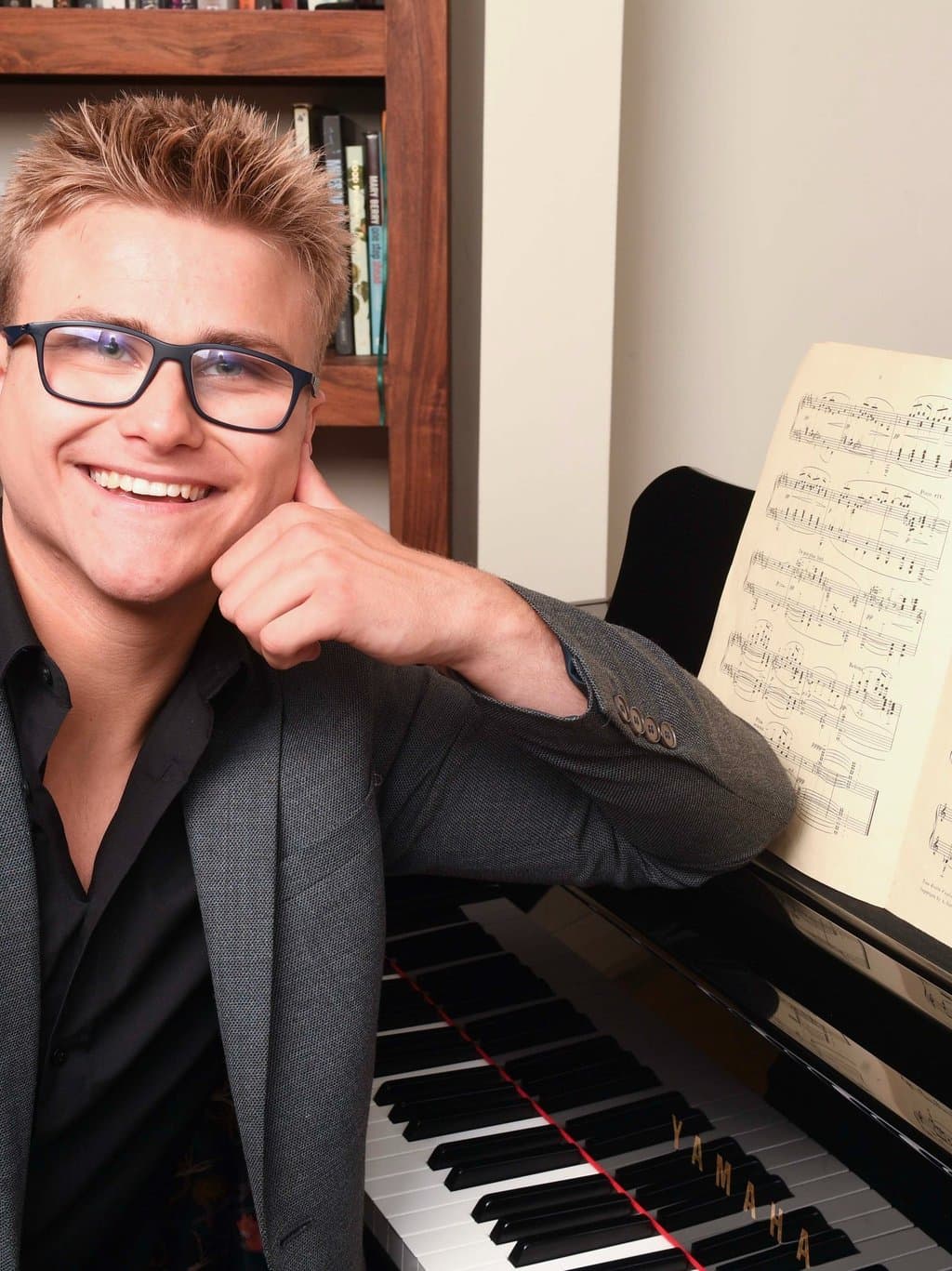
Written by
Norbert Steczkowski
Trinity Laban-trained pianist and piano teacher at Piano with Norbert. Active performer across London. Serving Harrow, Pinner, Stanmore and surrounding areas. More about the team →