This is the question I get most often, and the honest answer disappoints almost everyone.
There is no fixed timeline.
There is no "average student".
There are only individual people with different practice habits, different lesson frequencies, different attention spans, and different goals.
Anyone who tells you a confident number without asking about your week is selling you something.
That said, after years of teaching across Harrow, Pinner and Stanmore, I can tell you what realistic looks like for someone who actually shows up.
So here it is, with no fluff.
The first piece: two to three lessons
Most of our beginner students play their first recognisable piece within two or three lessons.
Not Beethoven.
Something simple.
A four-note melody, a folk tune, the chorus of a song they already know.
The point is not virtuosity.
It is the moment when piano stops feeling like a foreign object and starts feeling like an instrument they own.
This matters because the first three lessons are when most students decide whether they want to continue.
Get a piece in their hands quickly and the decision usually goes the right way.
Reading music fluently: three to six months
Reading music is the slowest skill to develop and the one that holds most students back at the early grades.
By month three, students who practise daily are reading single-line melodies in C major, F major and G major comfortably.
By month six they are coordinating both hands on simple pieces and can play short passages they have never seen before, which is the test that matters.
Adult learners often find this stage faster than children, because adult brains pattern-match more efficiently.
Their physical coordination usually catches up by the end of month four.
ABRSM, Trinity or RSL Grade 1: twelve to eighteen months
For a child practising 10 to 15 minutes a day, five days a week, with weekly lessons, Grade 1 is realistic by the end of the first 12 to 18 months.
That is the calibration we use when planning.
Some students hit it in 10 months.
Some take 24.
Both are fine, as long as the foundations are properly built.
Adult beginners can sit Grade 1 in 9 to 14 months if they want to, though many adults skip the early grades entirely and just enjoy playing.
Both routes lead to genuine musical progress.
Which exam board to choose is a separate question we cover in another post.
Comfortable amateur level: three to four years
This is the level most adults actually want, even if they don't say it out loud.
The ability to sit down at a piano at a friend's house, play a piece you remember, accompany a singer through the chorus of a pop song, and not feel embarrassed.
That comes around Grade 4 or 5 standard, which most consistent students reach in three to four years from a beginning start.
Children who started at six or seven and practise consistently typically hit this level by 11 or 12, which is also when they can sit Grade 5 theory and unlock entry to the higher practical grades.
Grade 8: eight to twelve years from beginner
Grade 8 is the standard for proficiency.
It is what music colleges look for, what most music scholarships expect, and the level at which a player has genuinely mastered the instrument's basic vocabulary.
Children who start at six or seven realistically hit Grade 8 in their mid-to-late teens, with consistent practice and a teacher who plans the journey.
There is no shortcut.
Anyone promising one is not teaching properly.
What slows progress (and how to fix it)
Inconsistent practice
15 minutes daily beats two hours on Sunday.
The brain consolidates motor learning during sleep, so daily reps wire in faster than infrequent long sessions.
Tell your child the truth: it is the daily-ness that matters.
Practising mistakes into permanent
Practice does not make perfect.
Practice makes permanent.
If a child practises a wrong note for a week, that wrong note is now part of how the piece exists in their head.
Teachers spend more time un-teaching ingrained errors than teaching new ones.
Pieces too hard
A piece pitched too far above current level frustrates the student, hides their progress, and quietly damages confidence.
Good teachers push slightly past comfort, never far past it.
The wrong teacher
Mentioned in the how-to-choose-a-teacher post: chemistry matters as much as credentials.
A child who dreads the lesson will not progress, no matter how qualified the teacher is.
What speeds progress
Daily short practice
Five days at 15 minutes beats two days at an hour every time.
Repertoire your child actually wants to play
Mixing exam material with one or two pieces the student chose themselves keeps the joy alive.
Joy is the thing that produces hours of practice over years.
Performances
Recitals, school assemblies, family Christmas.
Performing turns abstract practice into something real, and gives a deadline that motivates work.
Our students perform several times a year.
You can watch some of those performances here.
A teacher who genuinely listens
The student who feels heard practises more.
For adult learners specifically
Adults often arrive worried they are too late.
They almost never are.
The blockers for adult learners are different from children.
It is not capacity, it is time.
An adult who finds 20 to 30 minutes a day, four to five days a week, will progress faster than they expect.
Many of our adult students reach a comfortable amateur level (Grade 4 or so) within two years from a beginning start, and a few have gone on to sit Grade 8.
If you are an adult considering this, our dedicated adult piano lessons page covers what to expect, how Declan structures his lessons, and the realistic first six months.
Frequently asked
Can I learn piano in 6 months?
You can learn enough piano in six months to play recognisable pieces and feel real progress.
You cannot reach exam-level proficiency in six months.
Both things are true.
Is it harder to learn piano as an adult?
Different, not harder.
Adults learn reading and theory faster than children.
Adults take longer to build new physical coordination.
The two even out around month four.
How many hours a week should my child practise?
For ages five to seven, ten minutes a day, five days a week is plenty.
For eight to twelve, fifteen to twenty minutes daily.
For teenagers and serious students, thirty minutes minimum.
Consistency matters far more than total hours.
Will my child still progress with only one lesson a week?
Yes.
Most students take one lesson per week and progress just fine.
Two lessons a week is sometimes worth it during exam season or for advanced students.
More than that is rarely useful, and the bottleneck is practice between lessons, not lesson frequency.
Ready to put this into practice? Book a trial piano lesson with a conservatoire-trained teacher.
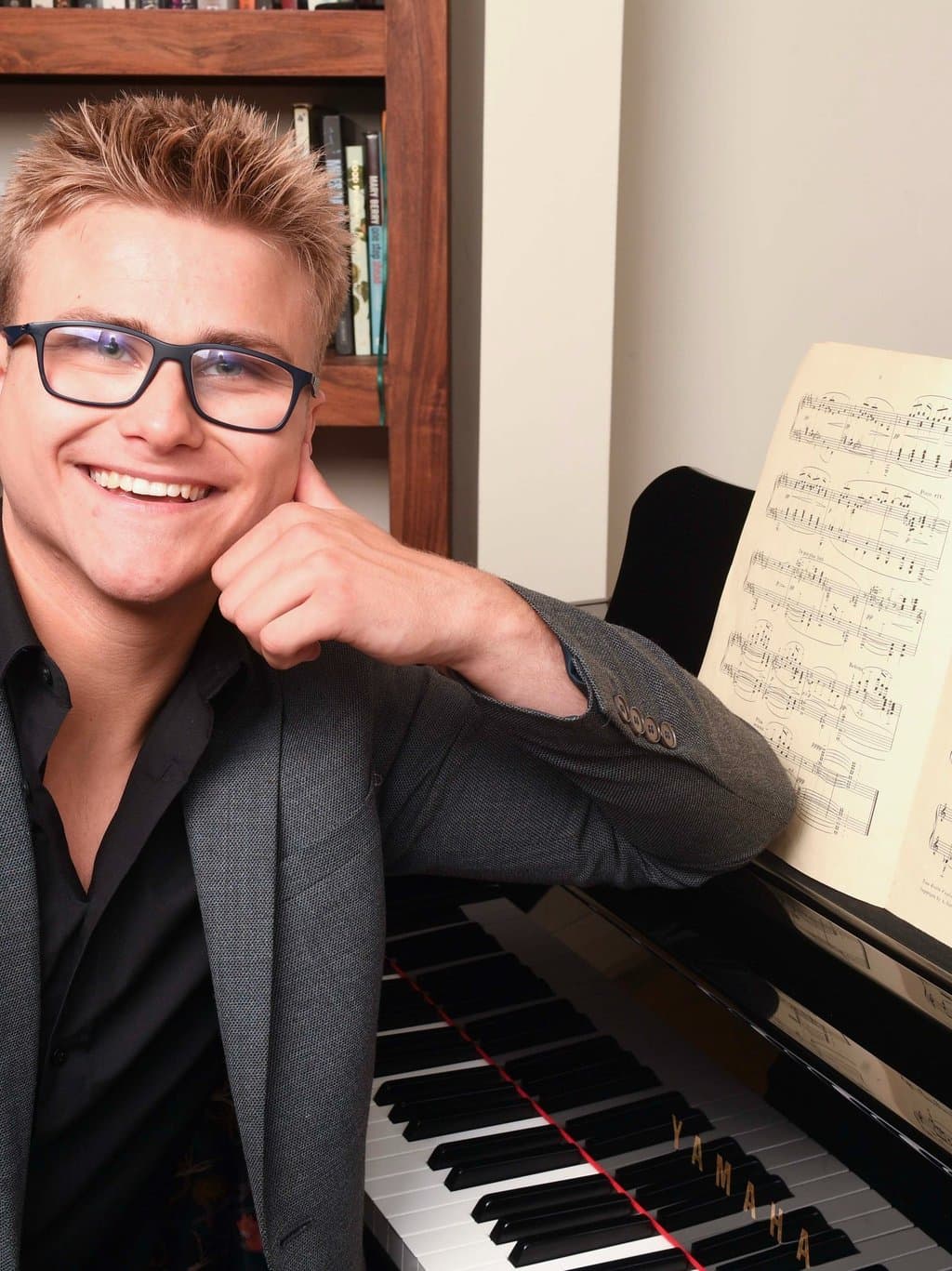
Written by
Norbert Steczkowski
Trinity Laban-trained pianist and piano teacher at Piano with Norbert. Active performer across London. Serving Harrow, Pinner, Stanmore and surrounding areas. More about the team →