If your child is approaching their first piano exam, you are about to walk into a confusing landscape with three competing UK exam boards.
Each has strong opinions about why theirs is the best.
The honest truth is that all three are respected by music colleges, schools and conservatoires.
Each suits a different kind of student.
Picking the wrong one can quietly waste a year.
Picking the right one can transform a child's relationship with the instrument.
So here is the framework I use with my own students.
Quick overview of the three boards
ABRSM
The Associated Board of the Royal Schools of Music.
The oldest and best-known of the three.
Heavy classical bias.
The exam structure is: three pieces from a fixed list, scales and arpeggios, sight-reading, aural tests.
Required in many independent and grammar schools as the default.
Trinity College London
The second-largest and offers more flexibility.
Three pieces with a slightly broader stylistic range, technical work that can substitute scales for orchestral exercises, plus your choice of two from sight-reading, improvisation, aural, or musical knowledge.
More relaxed delivery in the exam room, more adaptable for students with anxiety.
RSL Awards (Rockschool)
The rock-and-pop syllabus.
Far more contemporary repertoire: pop hits, blues standards, rock classics.
Technical work focuses on chord-based playing rather than purely classical scales.
The exam structure is performance-led, with optional improvisation and ear tests.
Designed for the kind of student who would rather play Billy Joel than Bach.
Which board suits which student?
Choose ABRSM if your child:
- Has classical taste and likes structured learning
- Is heading towards a music scholarship at a UK independent school (most still default to ABRSM)
- Will sit Grade 5 theory and progress to Grade 6+ practical (Grade 5 theory is required in ABRSM but not Trinity or RSL)
- Responds well to clear, traditional exam structure
The downside of ABRSM is the exam itself can feel formal and intimidating, especially for younger children.
The aural tests are notoriously the part students lose marks on, often because their teacher under-prepared them.
Choose Trinity if your child:
- Wants flexibility (Trinity lets you swap sight-reading for improvisation, for example, which suits students who panic at sight-reading but love making things up)
- Has performance anxiety. Examiners are typically warmer and the room feels less clinical
- Is a strong performer but weaker on aural tests
- Wants to keep their options open between classical and contemporary
Trinity also doesn't require Grade 5 theory before Grade 6+ practical, which speeds up some students.
Choose RSL if your child:
- Lights up at pop, rock, blues or jazz, and dims at classical
- Wants to play in a band one day, write songs, or accompany themselves singing
- Is less suited to formal classical training
- Has been told they "aren't musical" by a previous teacher (RSL often catches these students)
RSL grades are now widely accepted by UK schools and universities.
They qualify for UCAS points the same way ABRSM and Trinity do.
The historical snobbery about "rock" exams has mostly faded.
The cost question
All three boards charge similarly per grade.
ABRSM Grade 1 entry is around £45, Grade 5 around £60, Grade 8 around £105.
Trinity is roughly comparable.
RSL is similar at the lower grades and slightly cheaper at the higher grades.
Books and exam fees combined: budget £80 to £150 per grade.
Switching boards
Yes, you can switch.
We have students who started ABRSM at Grade 1 and 2, then moved to RSL at Grade 3 because they discovered they hated classical and loved blues.
We have students who started Trinity for the relaxed environment and moved to ABRSM for Grade 5 because the school required it.
Switching is straightforward and does not waste any work.
The practical skills carry across.
What we offer
We prepare students for all three boards.
Norbert handles ABRSM and Trinity preparation across classical and jazz.
Declan handles the RSL syllabus and the rock/pop side.
We will recommend a board honestly based on your child after a few lessons, not based on which one we prefer to teach.
If your child is heading into Grade 5 theory and needs structured help, we run individual and small-group theory tuition alongside practical lessons.
Frequently asked
Which exam board is the most respected?
All three are respected by UK music colleges and schools.
ABRSM has the longest history and the strongest classical reputation.
Trinity is widely respected for its flexibility.
RSL is respected within the contemporary music industry.
None of them is "the best" in absolute terms.
Do we have to do exams at all?
No.
Many students never sit a graded exam and progress beautifully.
Exams provide structure and milestones, which some students respond to and others don't.
Discuss with your teacher.
Can my child sit a Trinity practical without doing the theory grades?
Yes.
Trinity does not require theory grades up to Grade 8 practical.
ABRSM requires Grade 5 theory before Grade 6+ practical.
RSL has no theory prerequisite.
How do I prepare for a piano exam?
Work with a teacher who has prepared students for that specific board before.
Start preparation 4 to 6 months before the exam date for early grades, 6 to 9 months for Grade 5+.
Sit one or two mock exams in the month before.
Practise sight-reading and aural / improvisation regularly.
These are the parts students lose marks on.
What if my child fails their piano exam?
It happens.
ABRSM, Trinity and RSL all use the same broad pass / merit / distinction grading.
A "fail" is rare with proper preparation.
If it does happen, you can resit, usually within a few months.
Most students who fail were entered too early.
Work with the teacher on timing.
If you want to talk through which board fits your child specifically, book a trial lesson and we will assess current level and recommend a path.
Ready to put this into practice? Book a trial piano lesson with a conservatoire-trained teacher.
Written by
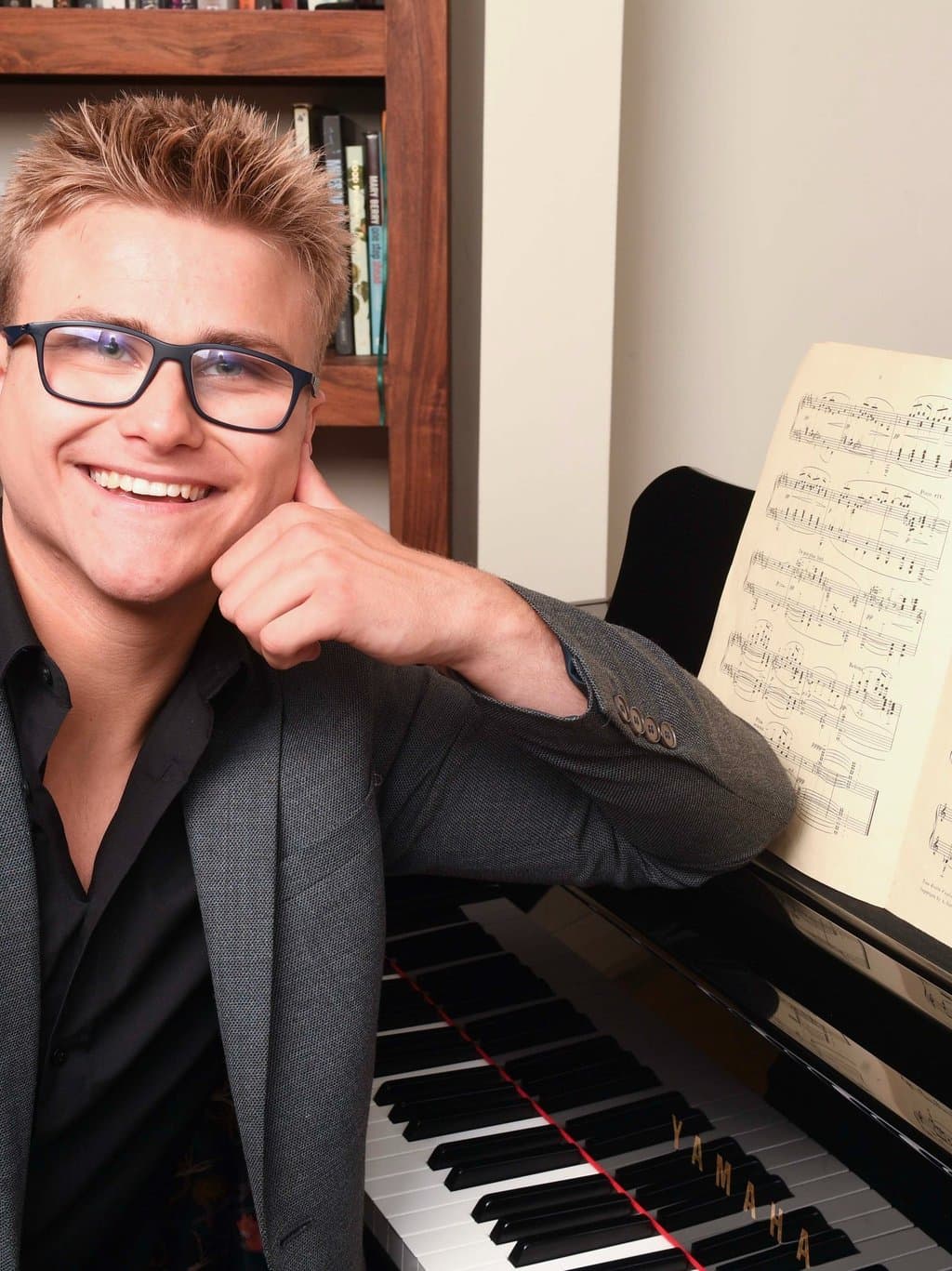
Norbert Steczkowski
Trinity Laban-trained pianist and piano teacher at Piano with Norbert. Active performer across London. Serving Harrow, Pinner, Stanmore and surrounding areas. More about the team →